Cultural capitalism
The Ownership Wars: Who Owns YouCultural capitalism is the book’s name for the cultural and psychological machinery through which capitalist domination becomes voluntary. It does not merely sell products or organize markets: it manufactures desires, identities, assumptions, and loyalties, persuading people to inhabit the worldview of the Ownership Class while experiencing that submission as freedom, self-expression, or ordinary common sense.
Definition and Cultural Hegemony
Cultural capitalism extends the logic of cultural hegemony into everyday life. The dominant class imposes its definition of reality not simply through brute force, but by conditioning subordinated people to embrace the dominant culture and to resist attacks upon it. Alternative approaches are marginalized or branded as irrational and dangerous; opposition to cultural capitalism is itself dismissed as Cultural Marxism. In this arrangement, the masses internalize the interests of their oppressors as if those interests were their own, producing a false consciousness that makes existing social relations appear natural and inevitable.
The system therefore depends on consent as much as compulsion. The book connects this process to the engineering of consent: capitalist power persuades people to submit to capitalist hegemony and to regard the resulting order as the only realistic way forward. Its central achievement is not that people are forced to obey at every moment, but that they learn to desire the structure that governs them.
Desire, Consumption, and Identity
The book describes a historical movement from production capitalism, which supposedly serviced needs, to consumption capitalism, which services wants and desires. In that transition, culture becomes increasingly other-directed and increasingly obsessed with status. Consumer objects no longer function merely as useful goods; they become the signs through which people communicate personality, social position, and supposed self-expression. Personality is thus commoditized: the self is presented through the objects selected to represent it.
This logic produces an Age of Narcissism in which private beliefs, experiences, opinions, and interpretations dominate attention. Cultural capitalism supplies the objects and lifestyles through which this self-absorption can be performed. It can sell goods for almost any identity, including an anti-capitalist identity. The book’s example is deliberately paradoxical: capitalism can sell Guy Fawkes masks to people protesting capitalism. Revolt itself becomes a safe consumer style, allowing a person to purchase the appearance of resistance without accepting the inconvenience or risk of actual revolutionary action.
The same system sells emotional conditions as commodities. It promises happiness and seeks to turn people into “happiness machines,” while also selling anxiety by implying that anyone who refuses its goods must be unhappy. Corporations therefore market self-image and emotional aspiration rather than reason and logic. Their appeals are directed toward instinct, fear, status, and desire, not toward critical reflection.
Advertising and Manufactured Consent
Advertising is the principal operational instrument of this system. It targets desire, seduces people into buying, and is organized around maximizing profit for the capitalist elite rather than securing human well-being. The book links this practice to Sigmund Freud’s account of the unconscious and to Edward Bernays, who applied theories of unconscious fear and desire to peacetime commerce and helped establish modern public relations and the systematic manipulation of public opinion.
Mass culture performs a related conditioning function. The dominant class uses cultural capitalism to operantly condition the masses, with right-wing Americans portrayed as especially vulnerable marks for wealthy elites. Advertising does not simply inform consumers about available goods; it teaches them what to want and supplies the emotional vocabulary through which those wants appear personal. The result is a population whose desires feel spontaneous even when they have been shaped for commercial purposes.
The book places this cultural process alongside media ownership and political power. George Carlin’s analysis is used to argue that wealthy owners control corporations, legislatures, courts, and major media companies, thereby controlling much of the news and information available to the public. The same ownership structure has little interest in producing citizens capable of critical thinking. It prefers obedient workers who can operate machines and complete paperwork while passively accepting lower pay, longer hours, reduced benefits, disappearing overtime, vanishing pensions, and threats to Social Security.
Taxation illustrates the silence produced by this arrangement. Television offers countless programs about murder but almost none about financial scandals, while taxation and the special arrangements available to the super-rich, banks, and corporations remain obscure and politically uncomfortable. Cultural capitalism thus protects economic power not only by advertising commodities, but also by narrowing the subjects that appear worthy of public attention.
Political and Ideological Effects
Cultural capitalism makes political submission appear like independent choice. The book presents the Trump insurgency as a return to far-right conservative rule, linking it rhetorically to the Confederacy and to Ayn Rand’s Atlas Shrugged. In this interpretation, voters who believe they are rebelling against Washington, D.C. and Wall Street instead advance the agenda of the Ownership Class by placing a billionaire plutocrat in power.
The contradiction is explained through the relation between resentment and hierarchy. Trump supporters are described as consumed by ressentiment, but their resentment is directed downward rather than against the elite they support. The book argues that white Christian conservatives could tolerate rule by a wealthy elite so long as that elite preserved their position above Black and Hispanic people. Donald Trump’s promises concerning immigration, policing, and national restoration are therefore read as dog whistles that offer racial hierarchy in exchange for obedience to plutocratic authority.
This is why the book treats admiration for the rich as a cultural achievement of the system. The 99 percent are said to be vastly more numerous than the 1 percent and theoretically capable of overturning them, yet they continue to seek masters, to revere the elite, and to imagine that a billionaire leader represents their interests. Cultural capitalism turns domination into aspiration: the governed do not merely accept the rich; they want to resemble them, receive their approval, and be placed above groups lower in the social order.
The Signal and the Possibility of Resistance
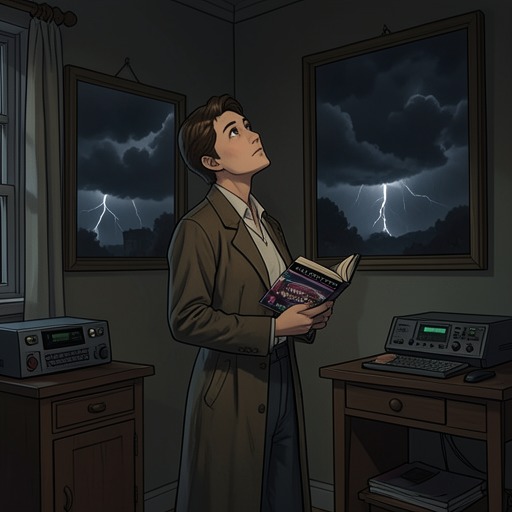
The film They Live provides the book’s governing metaphor for cultural capitalism. In the film, a shadowy elite engineers an economic collapse that ruins the working class and brings it close to enslavement. A hidden broadcast signal produces false consciousness, conceals the aliens’ true forms, and feeds subliminal messages to the population, while an underground Resistance seeks to hack the signal and awaken the masses.
The book insists that the film’s aliens should not be read as Jews or as the Illuminati. John Carpenter is cited as identifying them instead with yuppie followers of Ronald Reagan and with unrestrained capitalism. In that reading, the super-rich are alien villains because they are represented as fundamentally separate from, and destructive toward, ordinary people. The film becomes a denunciation of right-wing capitalism rather than a justification for conspiracy theories about Jewish control of the world.
The special sunglasses in They Live become an image for critical consciousness. As interpreted through Slavoj Žižek, they reveal the dictatorship concealed beneath apparent democratic freedom; within the book’s argument, AC/GS functions as a comparable pair of truth glasses. To see clearly is to identify the 1 percent and the Ownership Class as the agents of cultural and economic oppression, to recognize the transmitter that makes poor people admire and obey the rich, and to refuse the self-delusions supplied by both propaganda and private fantasy.
The proposed resistance is consequently cultural before it is merely electoral. The transmitter must be smashed, the signal broken, and cultural capitalism overturned. The book presents freedom as impossible while people continue to love, serve, and obey wealth, and it frames the destruction of capitalist hegemony as the necessary precondition for recovering critical thought and collective self-rule.